
FITURCA Tourism promotion in Los Cabos multiplies by 266 the investment made in 2025
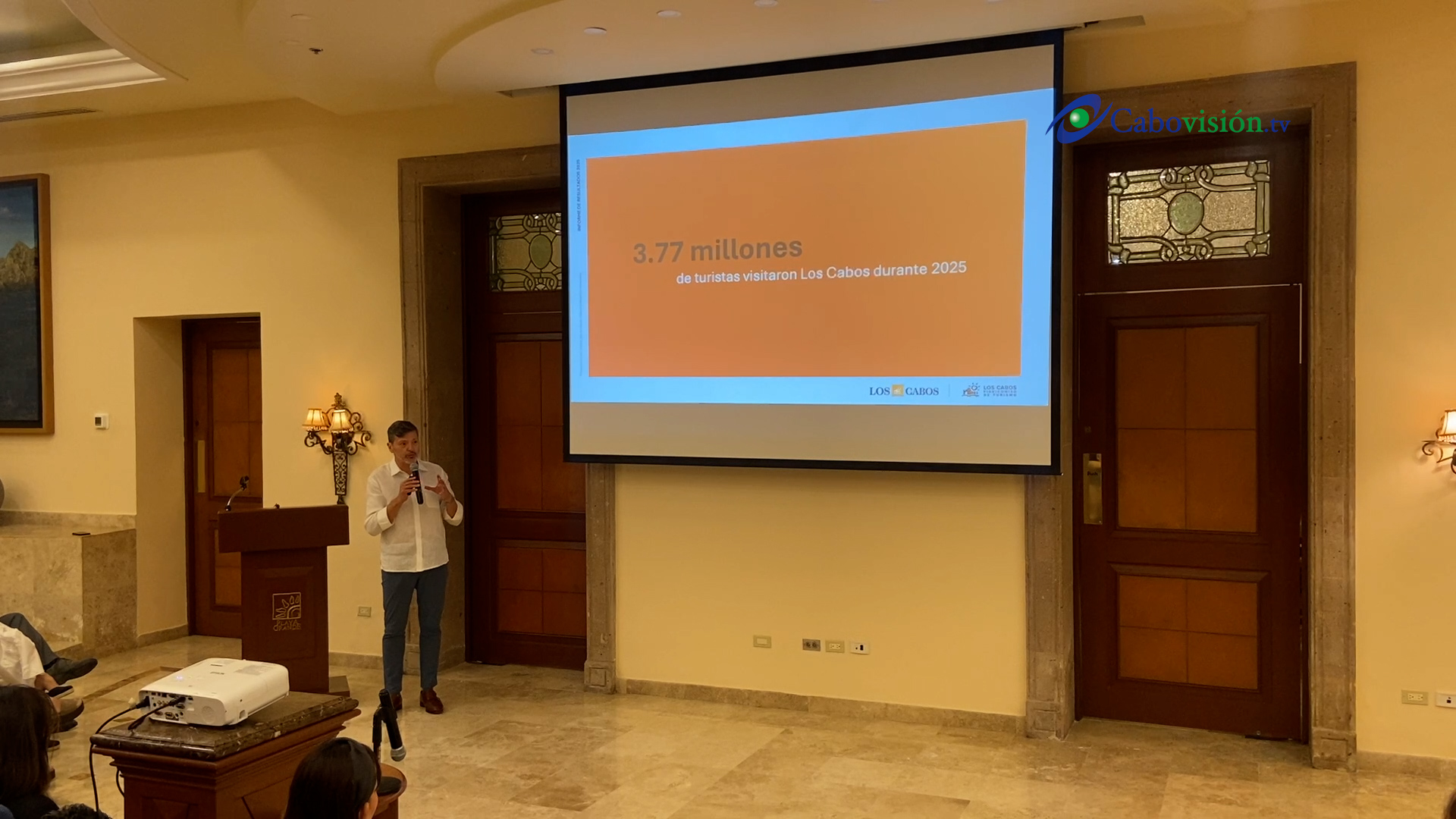
Los Cabos closed 2025 with a decade of sustained growth and a total of 3.77 million tourists, the highest figure ever recorded.
Tourism generated an economic impact of 133.3 billion pesos, boosted more than 44,000 formal jobs in Los Cabos, and extended its benefits to the community, with a third of tourist spending directed to sectors not directly related to tourism.
FITURCA's promotional strategy allowed the destination to expand its presence in 21 markets.
In an international context marked by intense competition among destinations and economic volatility, Los Cabos closed 2025 with solid results that reaffirm the effectiveness of its tourism promotion strategy, solidifying its position as one of the most important luxury and high-value destinations in Mexico and Latin America.
This morning, the Los Cabos Tourism Trust presented the results of the destination's tourism promotion at an event that brought together state and municipal authorities, as well as representatives from the business and hotel sectors, including the Secretary of Tourism and Economy, Maribel Collins; the President of the Los Cabos Hotel Association, Armando Gutiérrez; the Executive Director of the same organization, Lilzi Orcí; and the President of the Business Coordinating Council, Julio Castillo.
Under the leadership of the Los Cabos Tourism Trust (FITURCA), the destination has maintained a steady flow of visitors, strengthened its position in key markets, and maximized the impact of promotional investment, achieving a return of 266 times every peso spent on tourism promotion—a figure that confirms the profitability of the region's tourism management model.
“The destination is maintaining its volume of domestic and international tourists and making steady progress in diversifying its source markets and increasing economic impact,” stated Rodrigo Esponda, CEO of the Los Cabos Tourism Trust (FITURCA).
During 2025, Los Cabos maintained a stable flow of domestic and international tourists, with a total of 3.77 million visitors by year's end, representing a cumulative growth of 129% over the last decade. This performance confirms the destination's resilience in the face of complex global scenarios and its strong loyalty among strategic markets.
FITURCA's tourism promotion strategy in 2025 established Los Cabos' presence in 21 markets across the Americas, Europe, and Asia, reinforcing the destination's visibility in key locations and laying the groundwork for new long-term markets.
In 2025 alone, FITURCA had an intense promotional agenda, participating in more than 360 national and international trade shows, holding over 27,000 business meetings, and coordinating 180 familiarization trips with the participation of more than 900 journalists, influencers, travel agents, and tour operators. Taken together, these activities resulted in more than 2,500 strategic tourism promotion actions, aimed at strengthening the positioning of Los Cabos in key markets.
Air Connectivity and Hotel Offerings
One of the most significant developments of the year was market diversification. In 2018, emerging markets (excluding Mexico, the United States, and Canada) represented just 1.3% of total arrivals; by 2025, this share had grown to 2.3%. The growth from the United Kingdom, Spain, and Japan stands out, as does the increase in passengers from Germany, Switzerland, Italy, and France, who now connect via Frankfurt to reach Los Cabos.
This progress is directly related to the expansion of international air connectivity, which increased from 38 connected airports in 2019 to 42 international airports in 2025, including 32 in the United States, 8 in Canada, as well as airports in Germany and Panama.
In 2016, 16,382 international flights were recorded to Los Cabos; By 2025, this figure has increased by 45.8%, reaching 23,895 flights, according to AFAC data. This includes new routes from international cities such as New York, Kansas City, Nashville, St. Louis, Ontario, and Orange County, as well as Frankfurt, Germany, and Panama.
In the domestic market, connectivity has grown from 9 routes in 2019 to 16 connected airports in 2025, integrating destinations such as Santa Lucía, Cancún, Querétaro, Mexicali, Torreón, and Los Mochis, in addition to Mexico City, Guadalajara, Tijuana, and Monterrey.
Regarding hotel infrastructure, Los Cabos has grown from 15,000 rooms in 2016 to 22,000 in 2025, with 80% of the accommodations being in the five-star category. Luxury brands such as Four Seasons, One&Only Palmilla, Zadún Ritz-Carlton, Waldorf Astoria, and Grand Velas solidify the destination's position as a benchmark for premium tourism.
This positioning is reflected in hotel performance: the average daily rate (ADR) grew from $286 in 2017 to $440 in 2025, while RevPAR increased from $203 to $306, with a sustained average occupancy rate of 70%.
Impact of Tourism on the Community
“Tourism continues to be a key driver for the region. In 2025, the economic impact generated by tourism in Los Cabos reached 133.3 billion pesos. A particularly relevant fact is that 33% of this spending was on non-tourism-related items, demonstrating the cross-cutting impact of tourism on sectors such as local commerce, professional services, and everyday consumption, benefiting the population as a whole,” stated Rodrigo Esponda.
According to local perceptions, tourism has contributed to an increase in family income, allowing for greater savings, travel, and the purchase of durable goods. Furthermore, in 2025, an improvement in education is observed, with a higher percentage of residents holding bachelor's or postgraduate degrees, reflecting greater access to and continuity in higher education.
In terms of employment, through the third quarter of 2025, tourism generated 44,019 jobs in Los Cabos, with an average salary 37.6% higher than the state average and a year-over-year growth of 6%. The tourism sector represents 36.7% of total employment in the municipality.
At the state level, tourism contributes 35.8% of Baja California Sur's total production, accounts for 25.4% of businesses, and employs 40.1% of the workforce, confirming its strategic role in the regional economy.
With these results, Los Cabos closes 2025 reaffirming its tourism leadership, its capacity for adaptation, and the value of a promotional strategy focused not only on attracting visitors but also on generating economic and social well-being for its entire community.