Local Knowledge and Innovation: Key Elements for Building a Sustainable Future in Baja California Sur
The third edition of the Pacific Blue Forum, held at the Hotel El Ganzo, brought together researchers, producers, environmentalists, and cultural promoters to discuss how to preserve the natural and cultural heritage of Baja California Sur in the face of rapid urban growth, climate change, and the challenges of the blue economy.
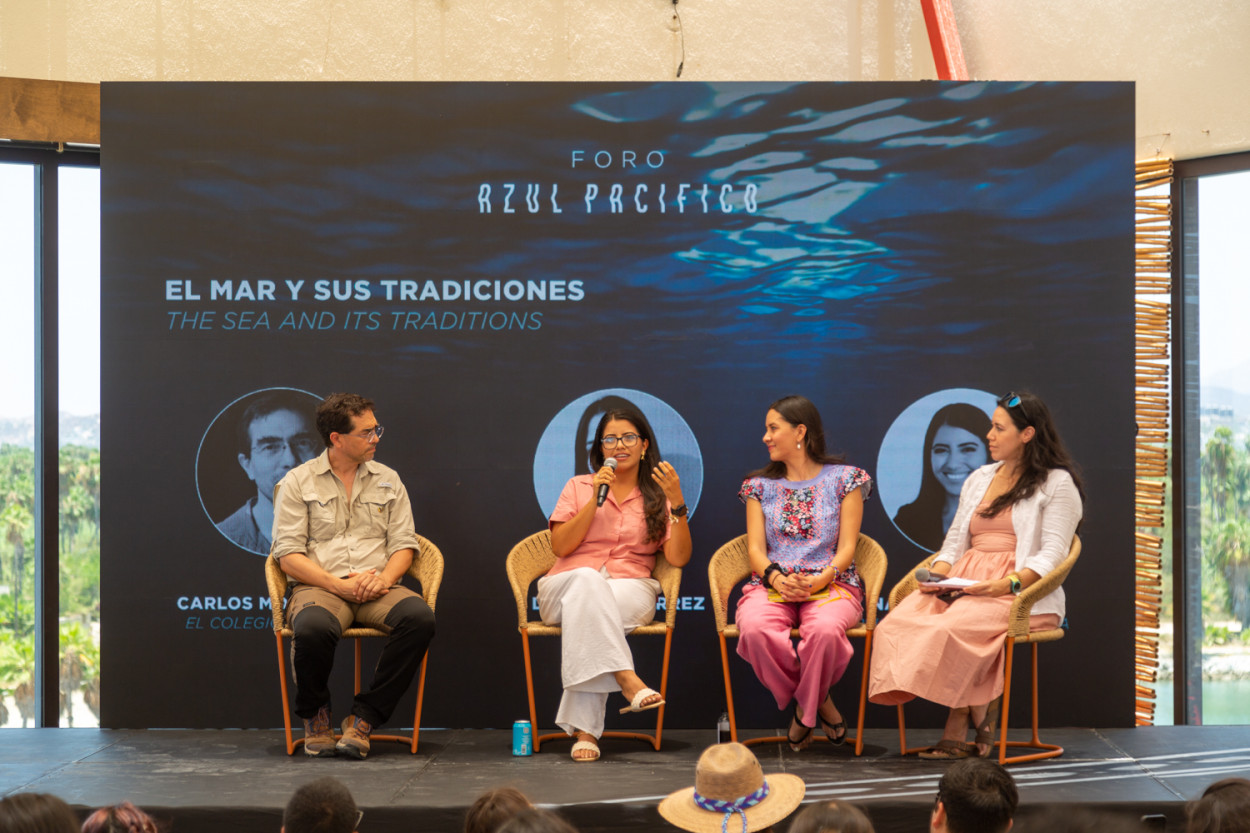
One of the panels emphasized that the conservation of the territory cannot be understood solely through science or technology, but must incorporate the knowledge of the communities that have inhabited the peninsula for generations.
Documentary filmmaker and photographer Nathalia Collins explained that her work seeks to reclaim the identity of Baja California Sur by documenting communities far removed from major urban centers.
"There are so many towns and communities that still safeguard so much knowledge, so much history, and so much memory. My intention in documenting them with photography and video is to preserve all these treasures that the Baja California peninsula holds," she said. During the discussion, participants agreed that Baja California Sur's historical isolation allowed it to preserve ecosystems and traditions that now represent an advantage in facing environmental challenges.
Environmental anthropologist Carlos Mondragón, a researcher at El Colegio de México, pointed out that public policies must be developed by first listening to those who live in the territory every day.
"There is no environment without humans, and there are no humans without culture. If we don't take the memories, values, and experiences of the communities seriously, we will continue to stumble over our own mistakes in any conservation initiative," he stated.
The specialists emphasized that fishermen, ranchers, and inhabitants of the Sierra Nevada mountains possess knowledge accumulated over generations about fishing seasons, ocean currents, climate cycles, and ecosystem behavior—information that is rarely considered in the design of environmental policies.
Collins recalled that the ancient inhabitants of Baja California maintained a close relationship between the mountains and the sea, evidence of which remains in cave paintings and archaeological sites distributed throughout the peninsula. “If we want to preserve a place, before thinking about its future we must stop and listen to the stories of the people who call this place home,” he said.
The panelists agreed that tourism growth must be accompanied by processes of education, citizen participation, and community identity.
Technology at the Service of Communities
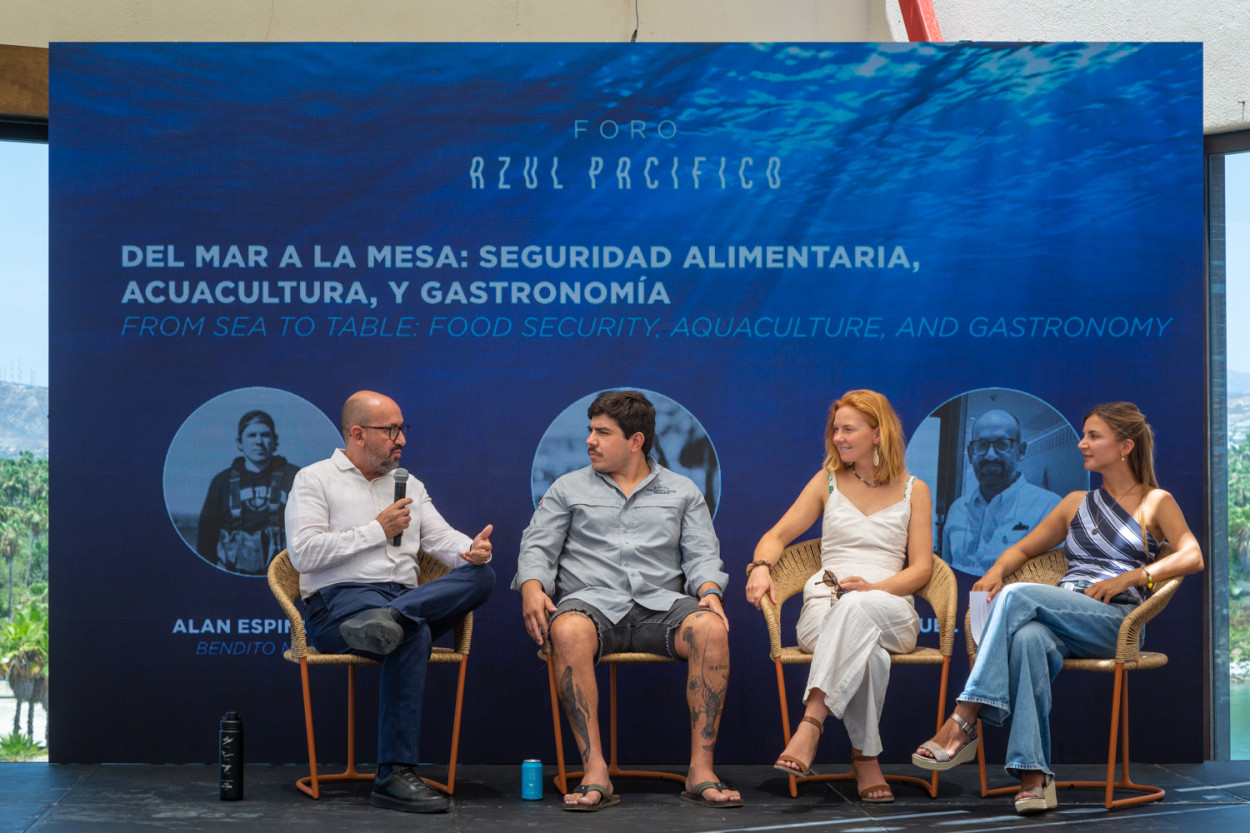
In a second panel, focused on the blue economy and fisheries production, researchers and producers analyzed how technological innovation can strengthen the sector without displacing traditional knowledge.
Researcher Miguel Ángel Ojeda—a fisheries specialist—explained that the main challenge is not only incorporating new digital tools, but first understanding the real needs of fishing communities.
“We can’t develop technology without knowing if the fisherman truly has a problem that needs solving. First, we must strengthen the community and then incorporate the technology,” he noted.
The specialist indicated that many fishermen possess decades of experience and a deep knowledge of the sea, but they face barriers to adopting digital tools due to connectivity issues, the sector’s average age, and a lack of training.
As an example, oyster producers explained how the use of sensors and buoys to measure temperature, salinity, and other parameters has allowed them to make better production decisions and reduce losses of millions of dollars caused by environmental changes.
Likewise, the participants agreed that sustainable fishing certifications must represent real economic benefits for those who produce.
Producer Alan Espinoza warned that sustainability is often used solely as a marketing strategy.
“Narratives without evidence are just marketing. If we truly want to talk about sustainability, there must be evidence, and that effort must also be reflected in a better income for the producer,” he stated. Another topic addressed was the potential of regenerative aquaculture and seaweed farming as alternatives to diversify the economy of coastal communities and strengthen food security.
Specialist Karlotta Rieve highlighted that these crops are already generating positive results in different regions of the world and could become an opportunity for Baja California Sur.
In conclusion, the participants agreed that the state's future will depend on integrating science, innovation, traditional knowledge, and social participation.
Beyond technology, they pointed out, true transformation begins by strengthening the sense of belonging of those who inhabit the territory and recognizing that marine conservation also begins in the mountains, in the rural communities, and in the villages that have built the identity of Baja California Sur over centuries.